

(CN) - The small Alpine nation of Slovenia was set for political turbulence after parliamentary elections Sunday saw the country's left-leaning liberal prime minister claim victory, though his path to forming a majority was far from clear.
This election was billed as another pivotal clash between pro-European Union voters, often represented by urban liberals, and hard-right conservatives, many of them living in rural areas, put off by EU policies.
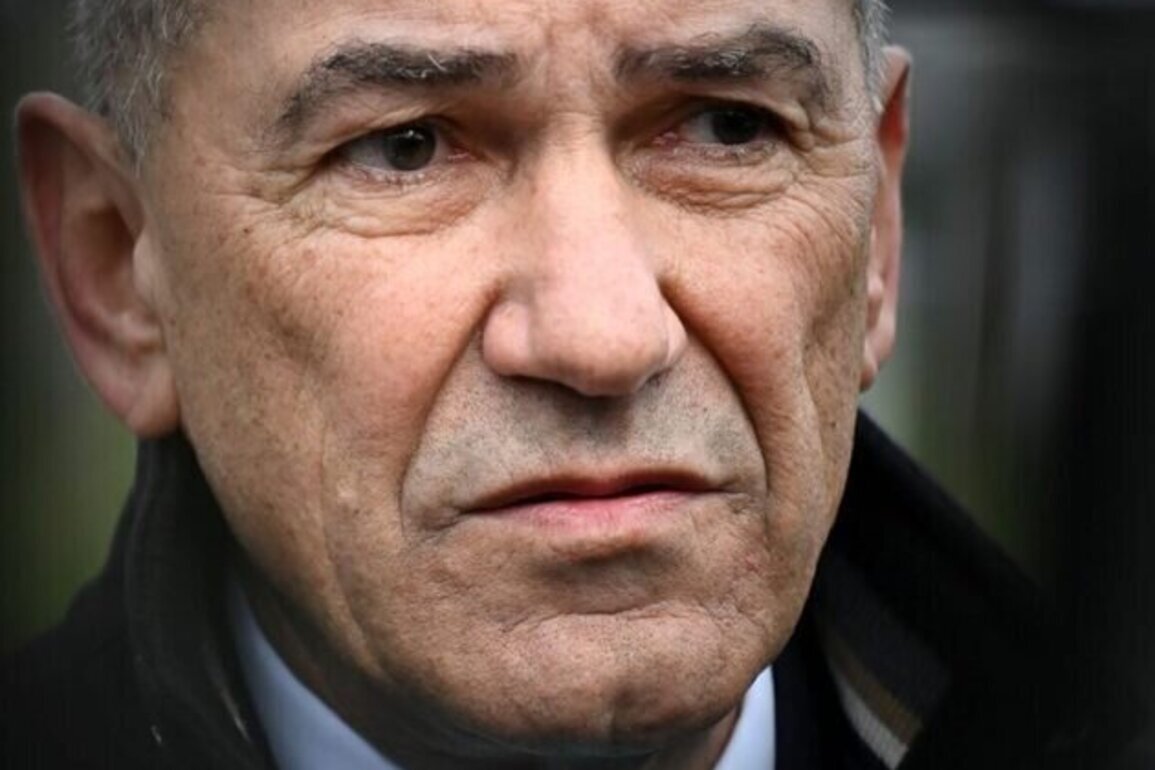
With nearly all votes counted, incumbent Prime Minister Robert Golob's Freedom Movement on Monday held a razor-thin lead over the Slovenian Democratic Party, a right-wing force headed by Janez Jana, a former prime minister aligned with U.S. President Donald Trump and Hungarian Prime Minister Viktor Orban.
The Freedom Movement received about 28.6% of the vote while Jana's SDS took in about 27.9%. Both parties ended up well short of holding a majority in Slovenia's 90-seat parliament.
Five smaller parties from across the political spectrum split the rest of the votes. The biggest breakthrough came from Truth, a populist right-wing party that emerged from anti-vaccine protests during the coronavirus pandemic. It picked up about 5.3% of the ballot and entered parliament for the first time with five seats.
With Jana questioning the legitimacy of the election results, vote recounts and legal challenges were expected. Even more paralyzing was the prospect that neither side may manage to cobble together a governing coalition any time soon.
"Overall, the election underscores a period of prolonged political uncertainty and instability," said Boris Vezjak, a professor of philosophy and commentator on Slovenian politics at the University of Maribor, in an email. "The governing process is likely to be marked by difficult negotiations, fragile compromises, and limited policy ambition."
Still, the election was cast as a win for Golob despite his party's loss of 10 seats since winning the 2022 election in a landslide. Polls had suggested Jana would win.
But in the closing stretch, Golob appears to have made up ground amid allegations that Jana hired an Israeli private intelligence firm, Black Cube, to spy on Golob's governing party and seek to expose high-level corruption.
Jana, 67, has been central to Slovenian politics since the 1980s, and morphed along with the country's changes.
He started as a communist in his youth before becoming a dissident. During the breakup of Yugoslavia and Slovenia's war of independence, he served as minister of defense. He later went from being a social democrat politician to a right-wing nationalist who served as prime minister three times.
The final days of the campaign were dominated by events surrounding the Black Cube allegations.
Initially, Jana benefited from the leaking of several audio and video recordings that seemed to show corruption among the ranks of the ruling coalition.
But Golob denied the allegations and claimed the videos were manipulated and part of a smear campaign against him.
Investigative journalists and activists traced the origins of the leaked recordings to Black Cube, a firm founded by former Israeli intelligence officers. The firm has been accused of conducting smear campaigns in other European countries.
On March 18, Slovenian national security officials confirmed Black Cube operatives had been in Slovenia and that they met with Jana at his party's headquarters in Ljubljana.
Jana eventually acknowledged meeting Giora Eiland, a former head of Israel's National Security Council and a Black Cube representative. He said they were longtime friends and that they had talked about Middle East politics, not Slovenian affairs.
Golob called on the EU to investigate the operation as "a clear hybrid threat" and an act of foreign interference in Slovenia's election.
French President Emmanuel Macron sided with Golob and said he had been the victim of "clear interference, disinformation and actions by third countries."
Golob and Jana have taken opposing views on Israel.
Jana has long been supportive of Israel while Golob has been critical of Israel in the wake of its actions in Gaza. Under his leadership, Slovenia recognized Palestine as a state in 2024 and last year he imposed a ban on all products from Israeli settlements in occupied Palestinian territory.
Vezjak said the Black Cube allegations likely harmed Jana in an election that came down to a "photo finish."
"Even a relatively small shift in voter sentiment may have influenced the final balance," he said.
But he said the affair mostly amplified "existing political dynamics rather than fundamentally reshaping them."
If the election results hold up, Golob will have the first chance to form a government but he faces some difficult choices.
Vezjak said Golob may end up negotiating with the right-wing Democrats and Truth.
"Both options carry significant political risks: the former may be perceived as ideologically unreliable or even a 'Trojan horse' of Jana, while the latter raises concerns about populism and governing instability," Vezjak said.

Even if the different parties can come to an agreement, any coalition would likely be "fragile, heterogeneous, and internally contested," he added.
Under those conditions, he doubted such a coalition would manage to advance a "coherent or transformative socioeconomic agenda."
Vezjak called it a "Pyrrhic victory" for Golob because his party "finds itself in a significantly weaker governing position than before, lacking both parliamentary dominance and clear coalition partners."
"Rather than reflecting a strong endorsement, the outcome suggests that a substantial portion of voters supported the Freedom Movement as the 'lesser evil,'" he said. "This indicates a political field still largely shaped by negative mobilization, where electoral choices are driven more by opposition to specific actors than by substantive programmatic alignment."
Courthouse News reporter Cain Burdeau is based in the European Union.
Source: Courthouse News Service