

Kieran O'Meara
Download PDF
Apr 13 2025
0
viewsJoshua Sukoff / ShutterstockDiplomacy is an intricate phenomenon. In his seminal work on the topic, Adam Watson (1982: 11) accentuates that diplomacy concerns the complex and multifaceted dialogue between distinct and independent civic political units, fundamentally maintaining international society. Forged from the interplay of constitutively reproduced and mutually recognised practices, as Hedley Bull (2012: 13) succinctly identifies, an international society exists when a group of states, conscious of certain common interests and common values, conceive themselves to be bound by a common set of rules in their relations with one another, and share in the working of common institutions. In the contemporary context, international society has been globalised to include all omni-acknowledged sovereign states, and so it may be referred to interchangeably with Global International Society (GIS).
Functioning as one such institution through its commonly performed role in legitimating action, the practice of diplomacy functions in similar vein to WD40 on a rusted hinge. By this, I propose that it permits antiquated and otherwise corroding entities entities formed in a socio-relational context sometime in the past the capability to co-manoeuvre and interconnect with fluidity. It is the facilitation of dialogue, as ease of formalised and legitimate intercourse that grants Diplomacy its status as a key institution of GIS.
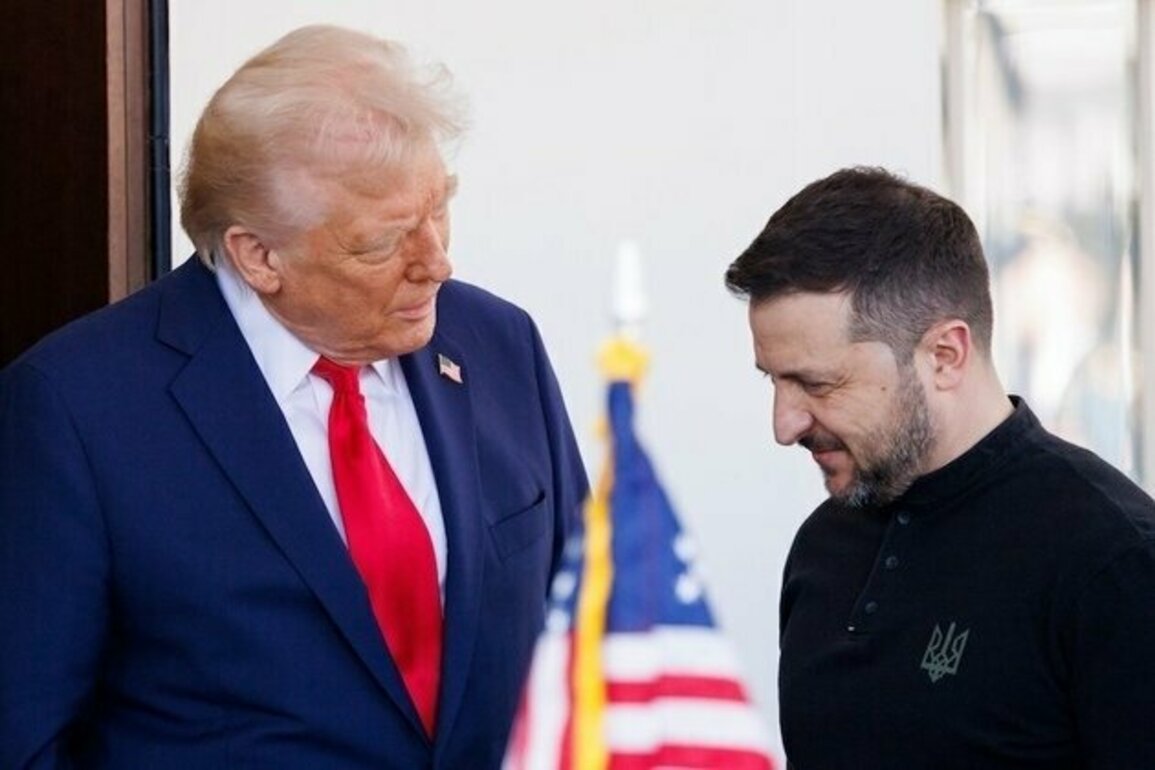
This theoretical framing provides a useful lens through which to interpret recent diplomatic affairs, particularly those under President Trumps second administration. Thus far, Trumps diplomatic practices should be described as frictious at best, be it concerning Greenland, Palestine, Panama, Canada, tariffs, NATO, European Security, and so on. As we come to the end of his second first-hundred-days, no event vindicates this description more so than his late-February encounter with Ukrainian President Volodymyr Zelensky.
During a televised engagement between the two heads of state in the Oval Office, Trump urged Zelensky to negotiate peace with Russia, stating Youre either going to make a deal or were out (Bateman and Debusmann, 2025). Amidst arising tensions, Vice President JD Vance accused Zelensky of being disrespectful, following a question concerning the Ukrainian Presidents attire. In a language not of his mother-tongue, Zelensky asserted that, During the war, everybody has problems, even you. But you have a nice ocean and dont feel [it] now, but you will feel it in the future, triggering an outburst from Trump wherein he exclaimed:
Ultimately, the confrontation led to the suspension of military aid to Ukraine and the collapse of a proposed mineral resources agreement, not to mention a clear bilateral diplomatic breakdown.
In response, foreign ministers and political representatives centred focus on the immediacy of Trumps behaviour alongside its effect on the future of a just and durable peace to the Russo-Ukrainian conflict. (Al Jazeera, 2025) Wrapped up in the spectacle of what Trump himself confirmed is going to be great television, (McCreesh, 2025) the global commentariat sought to showcase the incident, in some cases going as far to declare that diplomacy itself died live on screen. (Smith, 2025)
Although such an assertion is clear hyperbole, what I would like to claim is that the event revealed the fragility of the diplomatic norms underpinning GIS. This is not because diplomacy has been weakened as an institution of international society, but because its contingency upon the reproduction of its constitutive practices has been exposed, in real time nonetheless.
Trumps handling of this diplomatic engagement has sent shockwaves precisely because it is an instance where, in Watsons (2002) own words: the practice outruns the theory. Here we have an uncomfortable moment wherein the facade of diplomatic decorum collapses under the weight of raw political calculation. As practitioners from Nicolson (1939:15), to theorists like Bull and Martin Wight (1966: 90) have articulated, the essential principles of diplomacy manifest as a historically forged careful maintenance of balance, the recognition of mutual interests and the adherence to a common language of engagement between sovereign states crystallised in the rationalist western constitutional values of GIS. Trump abandoned these principles in his dealing with Zelensky, be that through his overt transactionalism or by deviating rhetorically from established diplomatic norms. In doing so, he not only disrupted a bilateral relationship, but exposed the inherent fragility of the normative bedrock that have historically sustained international coexistence and cooperation.
International Society is upheld on the key premise that order is maintained through shared interests, established rules, and the institutions that enforce them all in dialogue with an overarching notion of justice (Bull, 1971, 2012). Historically, diplomacy has both enforced and embodied such commonality, even to some degree by those revolutionary states that seek to overhaul the defining institutions of GIS (Armstrong, 1993; Halliday, 1999). Empirically, the Congress of Vienna institutionalised diplomacy as an orderly practice, reinforcing the balance of power as a central tenet of international society. This notion had earlier been enshrined by the 1713 Treaty of Utrecht, which set a precedent for diplomacy to function as an arbiter between sovereign states, providing continuity even as power dynamics evolved into the contemporary era. Such a claim is not a revelation by any standard.
Trumps approach to diplomacy often characterised by abrupt shifts, public spectacle, and a rejection of procedural norms directly contests this tradition. His meeting with Zelensky exhibited a transactional approach to statecraft that dismisses the very conduct that give diplomacy its stabilising effect. This is not to say that varying diplomatic norms are novel. Indeed, it would be incorrect as an act of colonial re-interpretation to neglect that differing practices of diplomacy existed and remain extant outside of the dominant Great Powers spatio-temporal and epistemological context of western modernity (Watson, 1982: 82-95; Keal, 2003: 27). However, what makes Trumps approach so disruptive is its deliberate exposure of the underlying dynamics of diplomacy, challenging the magnitude and strength of such engrained constitutive practices of stable order for universal viewing.
Diplomacy, in its traditional form, is an art of controlled ambiguity of signalling intent without overt declaration, of leveraging influence without the appearance of coercion. Trumps mode of engagement with Zelensky, however, was defined by an absence of this controlled ambiguity. His explicit, unscripted, and transactional rhetoric laid bare the power imbalances that diplomacy typically seeks to obscure. In doing so, he has forced us to confront an unsettling reality: that the common norms of diplomacy are upheld not by any inherent moral force, but by the continued practice of shared expectations. When those expectations are disregarded, even momentarily, the edifice of GIS wobbles.
Wights (1966: 96) argument that diplomacy maintains independence of membership within the balance of power, operated by states long before they formulated explicit rules for it, further contextualises the impact of Trumps actions. Diplomatic practice in the modern international system has always been both an organic and codified system a tacit agreement between sovereign states to conduct their affairs within certain behavioural and reciprocated parameters.
The raison de socit of diplomacy hence lies in its function as a medium through which states signal continuity, predictability, and commitment to the norms that make international cooperation possible. When international society is considered as a normative standard, the great powers that colour its values bear a rational responsibility to preserve the distribution of power that benefit them and their conception of justice. Yet, at the same time, upholding such a standard sustains the very conditions that make international cooperation possible. This presents a normative bind that becomes problematic for those Revolutionists in Wights (1987, 1991) nomenclature who seek to overhaul international society for an increasingly just order, yet without undermining the possibility of cooperation between peoples.
Simply put, on a normative level, if we take the claim that Bull (1980: 446) makes seriously, that Great powers cannot expect to be conceded special rights if they do not perform special duties responsibilities directed to the maintenance of balanced order and cooperation we must critique the US administration for its flagrant display of international irresponsibility.
Trumps diplomatic performance consistently serves to somewhat undermine this equilibrium. If diplomacy has historically relied on a shared pretence of mutual respect and structured negotiation, then the overt disruption of this practice suggests some breakdown. This collapse is not of diplomacy as a common practice, but of the perception that its rules are immutable. Watsons insights on legitimacy are particularly pertinent here. The power of diplomacy does not come from force alone, but from the belief that the rules governing it are adhered to by all major actors in concordance with their obligations, and normalised throughout the society. As Watson (2002: 145) so aptly puts it,
In this sense, Trumps break with traditional diplomatic norms is not just a moment of disruption, but a potential pivot point where new expectations and possibilities for state behaviour may emerge, challenging the status-quo and thus the order of international society itself. The accusation of irresponsibility thus extends even further. Whether the behaviour Trump displayed will be formalised into a coherent practice or merely serve as an aberration in the broader arc of diplomatic history remains to be seen.
This is not to say that diplomacy has been permanently weakened or that international society is in irreversible decline. As Charlotta Friedner Parrat (2024) has coherently explored, change is an engrained quality of international order and the society that institutionally underpins it. Rather, what the Trump-Zelensky episode illustrates is that the institution of diplomacy in said society depends not only on formal agreements but also on an unspoken consensus about how states ought engage with one another. If one actor deliberately flouts these conventions without immediate consequences, others may be emboldened to do the same not least when a great power beneficiary to the society is the irresponsible culprit.
The notion that Trumps diplomacy represents an existential crisis for international society would be an overstatement. As Watson reminds us across his broad body of work, diplomacy has been a resilient force throughout history, adapting to shifting power structures and evolving norms. The Trump-Zelensky incident was not an anomaly in terms of great power politics. Misunderstandings and disagreement have long been part of the mainstay of diplomacy and indeed populate the debates of diplomatic histories. Nonetheless, in its display of the power dynamics that diplomacy has traditionally worked to obscure, the event was an aberration of normative responsibility to a stable order.
Trumps actions have not undercut diplomacy as an institution of international society, nor have they weakened its necessity. Rather, they have starkly illuminated the fragile and precarious practical contingencies that underpin it contingencies of practice that, once shaken, may be difficult to restore.
References
Al Jazeera (2025) World reacts after Donald Trump, JD Vance berate Ukraines Zelenskyy | Donald Trump News | Al Jazeera. Available at: https://www.aljazeera.com/news/2025/2/28/world-reacts-after-donald-trump-jd-vance-berate-ukaines-zelenskyy (Accessed: 8 April 2025).
Armstrong, D. (1993) Revolution and World Order: The Revolutionary State in International Society. Oxford, New York: Oxford University Press.
Bateman, T. and Debusmann, B. (2025) How the Trump-Zelensky talks collapsed in 10 fiery minutes, BBC News. Available at: https://www.bbc.com/news/articles/c2erwgwy8vgo (Accessed: 8 April 2025).
Bull, H. (1971) Order vs. Justice in International Society, Political Studies, 19(3), pp. 269283. Available at: https://doi.org/10.1111/j.1467-9248.1971.tb00674.x.
Bull, H. (1980) The Great Irresponsibles? The United States, the Soviet Union, and World Order, International Journal, 35(3), pp. 437447. Available at: https://doi.org/10.1177/002070208003500302.
Bull, H. (2012) The Anarchical Society: A Study of Order in World Politics. Third Edition. Basingstoke: Palgrave Macmillan UK.
Friedner Parrat, C. (2024) Change in international order? An institutional analysis, European Journal of International Security, 9(3), pp. 449467. Available at: https://doi.org/10.1017/eis.2024.13.
Halliday, F. (1999) Revolution and World Politics: The Rise and Fall of the Sixth Great Power. Duke University Press.
Harold Nicolson (1939) Diplomacy. London: Oxford University Press.
Keal, P. (2003) European Conquest and the Rights of Indigenous Peoples: The Moral Backwardness of International Society. Cambridge: Cambridge University Press (Cambridge Studies in International Relations). Available at: https://doi.org/10.1017/CBO9780511491467.
McCreesh, S. (2025) This Is Going to Be Great Television: Trump Sums Up His Zelensky Showdown, The New York Times, 1 March. Available at: https://www.nytimes.com/2025/02/28/us/politics/television-trump-zelensky-ukraine.html (Accessed: 8 April 2025).
Rathi, A. and Lu, C. (2025) Read Trump and Zelenskys Fiery Oval Office Exchange, Foreign Policy, 23 April. Available at: https://foreignpolicy.com/2025/02/28/trump-zelensky-meeting-transcript-full-text-video-oval-office/ (Accessed: 8 April 2025).
Smith, D. (2025) Diplomacy dies on live TV as Trump and Vance gang up to bully Ukraine leader, The Guardian, 28 February. Available at: https://www.theguardian.com/us-news/2025/feb/28/trump-zelenskyy-shouting-match-oval-office (Accessed: 8 April 2025).
Watson, A. (1982) Diplomacy: The Dialogue Between States. Londonand New York: Routledge.
Watson, A. (2002) The Practice Outruns The Theory, in B.A. Roberson (ed.) International Society and The Development of International Relations Theory. London and New York: Continuum, pp. 145155.
Wight, M. (1966) Western Values in International Relations, in M. Wight and H. Butterfield (eds) Diplomatic Investigations: Essays on the Theory of International Politics. London: George Allen & Unwin Ltd, pp. 89131.
Wight, M. (1987) An Anatomy of International Thought, Review of International Studies, 13(3), pp. 221227. Wight, M. (1991) International Theory: The Three Traditions. Edited by G. Wight and B. Porter. London: Leicester University Press for the Royal Institute of International Affairs.
Further Reading on E-International Relations
- Trumps Personalised North Korea Policy: 20182020 and the Way Forward
- Opinion How Could Iran Survive Trumps Maximum Pressure 2.0?
- Opinion Trumps Effective China Strategy
- Opinion The Path Beyond Trump in US Human Rights Policies
- Opinion Re-election in Doubt: The Perfect Storm Approaches Donald Trump
- Opinion Trumps Coronation: The New Romanov Century
About The Author(s)
Kieran OMearais a PhD Candidate in International Relations at The University of St. Andrews. His academic interests focus on the intersection between the English School of International Society, transnational revolutionary groups, global revolution, the praxis of global social movements and World Order. He is also a Director and Editor-at-Large at E-International Relations. Find him/X:@kieranjomeara.
TagsDiplomacyDonald TrumpInternational Society