

Martin Duffy
Download PDF
Feb 27 2025
0
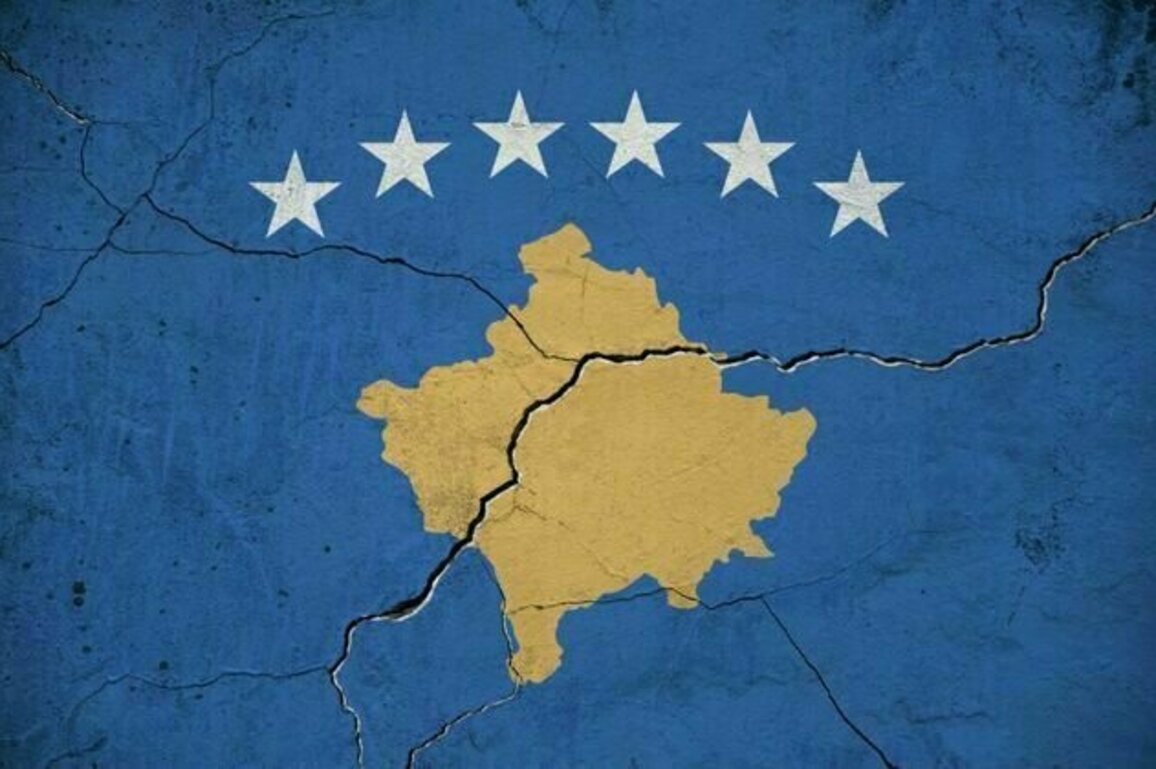
viewsAliaksaB/ShutterstockIn the period after the Dayton Peace Accords and for more than a decade thereafter, international monitors scrutinised elections across ex-Yugoslavia for symptoms of hope. The slightest evidence of ethnic power-sharing, cross-party consensus or political diversity was seized upon by optimistic commentators, hungry for details of positive change. This latest run of Kosovo parliamentary elections is no exception. Alas, the peace accord is a curates egg. TheRambouillet Agreementfailed despite its expensive pillars of peacekeeping and community reconstruction. Even the 2023Ohrid Agreement, a normalisation pathway, is politically flawed. Thus, the governance climate in Kosovo, as across the successor-states, is uneasy stalemate.
TheCentral Electoral Commission(CEC/KQZ) announced at the start of campaigning for the 2025 elections, We are here for allwe stand for professional elections across the territory and remain free of party prejudice. Largely this has been accepted. There are no systemic electoral abuses but as a law professor at the University of Pristina observed to me, Kosovo is in itselfa living irregularity. It is a state which must take a rain-check on its legitimacy and even its viability every day.The latest parliamentary elections ran on 9 February 2025 to elect the 120 members of the Kosovo Parliamentary Assembly. Preliminary results showed that no party had won a majority, with the ruling Vetvendosje party of Prime Minister Albin Kurti winning. As the processes of appeals has concluded, the confirmed results are much the same.
Given the sensitive historical-ethnic geography of the region, and the rawness of post-conflict politics, perhaps the best that can be hoped for is the relative absence of full-blown violence in the political system. The professor adds,free of prescribed violations but not exactly violation-freeKosovo legislators are adroit at manipulating their exercise of the electoral regulations to remain a shiver within the lawThe 2025 Kosovo polls were not marked by large-scale acts of political intimidation or corruption, although the nomenclature of Kosovan politics is such that structural inequity is implicit in the state. No parliamentary entity, forged in the atmosphere of war-time atrocities conducted by all sides , could hope to entirely escape criticism.
In the 2021 elections, Lvizja Vetvendosje (LVV) won 58 seats, thus forming a coalition with minority parties to form a government. It proved to be the first cabinet since Kosovos independence in 2008 to complete a full four-year mandate. The 120 members of the Assembly are elected by an open-list ballot under proportional representation for a four-year term, with 20 sets specifically reserved for national minorities. Seats in the Kosovo Parliamentary Assembly are allocated using the Sainte-Lagu method with an electoral threshold of 5%. As aCEC spokespersontold me, Thus far that process has been respected and largely expedited without concerns
By Kosovos constitution, parliamentary elections must be held no later than 30 days and no earlier than 45 days prior to the expiration of an outgoing parliaments mandate. Thus, on 31 July 2024,President Vjosa Osmanicalled the leaders of political parties to a consultative meeting regarding the scheduling of the upcoming elections. In her invitation, Osmani underscored that, in accordance with the constitution and the electoral code, the elections must take place between 26 January and 16 February 2025
Opposition figures, including Lumir Abdixhiku of the Democratic League of Kosovo (LDK), Ramush Haradinaj of the Alliance for the Future of Kosovo (AAK) and Memli Krasniqi of the Democratic Party of Kosovo (PDK), advocated for elections on 26 January, while Mimoza Kusari-Lila of the Alternativa proposed delaying the elections to 9 or 16 February, citing logistical concerns. Prime Minister and leader of Vetvendosje (LVV)Albin Kurtidid not attend the consultation due to a prior commitment. Concluding, on 16 August, Osmani announced a compromise- namely that the elections would be scheduled for 9 February 2025. Some 28 political entities submitted applications, including 20 political parties, five coalitions, two civil initiatives, and one independent candidate, with a healthy score of 1,280 candidates being nominated. TheCEC suggestedto me that this showed acceptable political buy-in on the process
However, 23 December 2024, some potential forks in the road materialised as the CEC disqualified the Serb-List from the elections due to remarks made by the partys leader Zlatan Elek, which they criticized as nationalistic in nature. The party appealed the decision, calling it institutional and political violence against the Serb minority. On 25 December 2024, theElection Complaints and Appeals Panel(ECAP) accepted the appeal, and instructed the CEC to certify the Serb-List. The upcoming atmosphere was (nevertheless) further soured.
In August 2024 the governing parties of Vetvendosje, Guxo and Alternativa announced that they would share the same electoral-list, with incumbent PM Kurti leading the list. On 27 March 2024 the Democratic Party of Kosovo (PDK) nominated Bedri Hamza, South-Mitrovica mayor and former Minister-of-Finance, for Prime Minister. On November 3, Hamza announced their slogan would be Kosovo can do better. Hamza also announced his platform, with the economy being the top priority. In December 2023, the Democratic League of Kosovo (LDK) published its platform, The New Road. In July 2024, the LDK and Christian minority party PSHDK announced that they would share the same electoral-list. This is power-sharing, Kosovo-style but not exactly evidence of post-Accord political-pluralism.
In January 2024, opposition parties Alliance for the Future of Kosovo (AAK), Social Democratic Initiative (NISMA) and Conservative List of Kosovo (LKK) announced they would run together in a coalition led by Ramush Haradinaj, AAK leader and former PM. The Social Democratic Party of Kosovo (PSD) was invited into this pact but rejected on ideological grounds. Eventually this coalition published their platform emphasizing foreign relations and a goal of joining NATO and the EU. The New Kosovo Alliance (AKR), the Justice Party (PD) and assembly members of the ruling LVV agreed a Family List Coalition formed as opposition to the ruling partys attempt to increase LGBTQ rights in Kosovo, specifically the proposed Civil Code which would legalize same-sex civil unions.
Following the formation of the government, PM Kurti declared that domestic policy was henceforth going to have priority over dialogue with Serbia. It was a whisper that deserved a political rocket, and was followed by actions of blatant intransigence, such as banning Serbian license-plates being used by Serbian citizens in Kosovo. This drew riots in the Serb-majority north Kosovo as well as condemnation from Serbia, which threatened military action. On 30 September 2021, the EU brokereda temporary dealbetween Serbia and Kosovo, staying-off political violence.
In July 2022, the Kosovan government announced that Serbian citizens entering Kosovo will receive entry-and-exit documents, sparking road barricading by local Serbs in Kosovo. Numerous Serbian politicians and policemen walked out of their co-operation with Kosovan institutions. This was another rocket on already shaky ethnic relationships.
The sensitive issue of marriage and civil-partnerships for same-sex couples saw further clashes in the Kosovo Assembly. In March 2022, theCivil Code Draftdid not pass first-reading due to strong opposition, particularly regarding the potential legalization of civil-partnerships. The religious climate in Kosovo momentarily stood on a cliff-edge. In April 2024, PM Kurti announced plans to passa new Civil Codein May, which included provisions for civil-partnerships. This would have made Kosovo only the third country in the Western Balkans, (joining Croatia and Montenegro) to grant such recognition. That process has been delayed indefinitely. It remains to be seen whether any progress on this or other controversial reforms can be made, post-election. This is likely to constitute a future acid-test of Kosovan power-sharing.
As for the polls, the EU fielded 100 observers led byFrench MEP Nathalie Loiseauaugmented by the Council of Europe. EU monitors praised the election as peaceful and competitive while eschewing the negative electoral environment- the EU thus criticising the presence of harsh rhetoric reflecting deep political divisions. The EU also regretted the pressurization of voters dependent on Serbian social assistance or employment in Serbia-managed institutions in the Kosovo-Serb municipalities. Conversely, they condemned Vetvendosjes rhetoric against Serbs. TheEU also observedthat US special envoy Richard Grenell had unwittingly demonstrated potential partisanship by name-calling Kurti as, an unreliable partner of the USA The EU verdict on the poll is therefore mixed.
No party won an overall majority, with Kurtis Vetvendosje party receiving around 41% of the vote. The official release of official was stymied by failures in the CEC website. This generated conspiracy theories. However, CEC methodology is still widely regarded as robust.Kurti announcedhe would continue to faithfully serve all who voted or contested the 2025 elections. Kurti has proven to be a steely politician, but political coalition-making is an eternal challenge. More than thirty years since its creation, the Assembly remains unsteady. To that extent it is a metaphor for the Republic itself. As in the Latin cogito, ergo sum, the first principle of Ren Descartess philosophy, perhaps survival is the best that can be hoped. The future political landscape necessitates juggling Kosovos potentially seismic ethnic plates.
Further Reading on E-International Relations
- Womens In/Security in Kosovos 2025 Elections
- Timor Leste: A Case-Study in Fractured Parliamentary Democracy
- Opinion No Change After Kyrgyzstans 2021 Parliamentary Elections
- The Decline of the SDLP and their European Election Brexit Headache
- The Venezuelan Crisis: Maduros Regime Legitimacy and Potential Outcomes
- Worse Than a Dictatorship: Rwandas 2024 General Election
About The Author(s)
Martin Duffy has participated in more than two hundred international election and human rights assignments since beginning his career in Africa and Asia in the 1980s. He has served with a wide range of international organizations and has frequently been decorated for field service, among them UN (United Nations) Peacekeeping Citations and the Badge of Honour of the International Red Cross Movement. He has also held several academic positions in Ireland, UK, USA and elsewhere. He is a proponent of experiential learning. He holds awards from Dublin, Oxford, Harvard, and several other institutions including the Diploma in International Relations at the University of Cambridge.
TagsKosovo